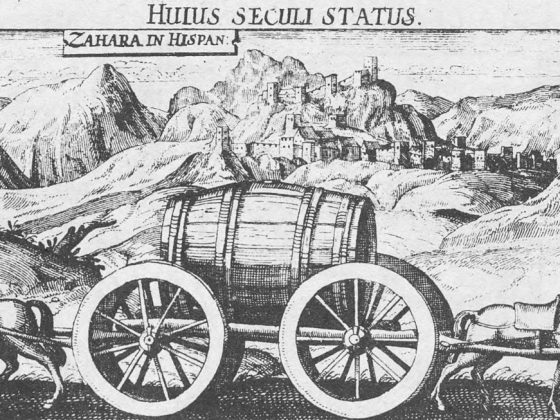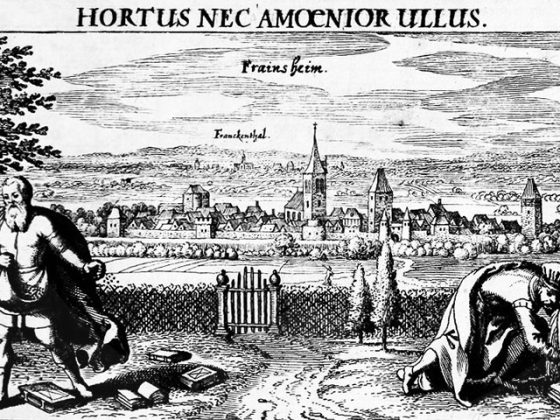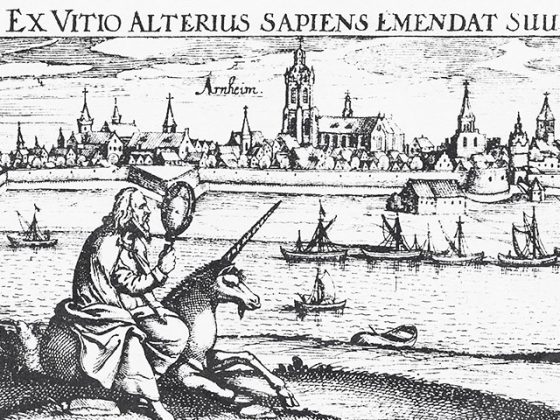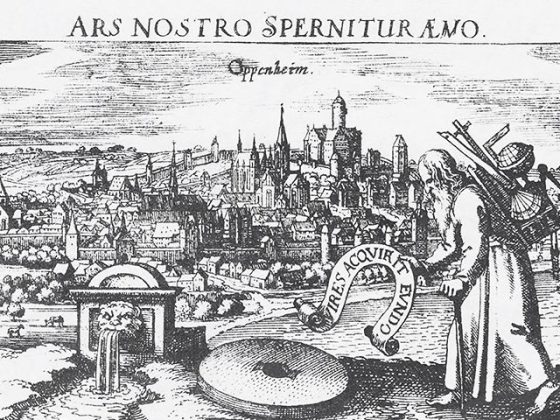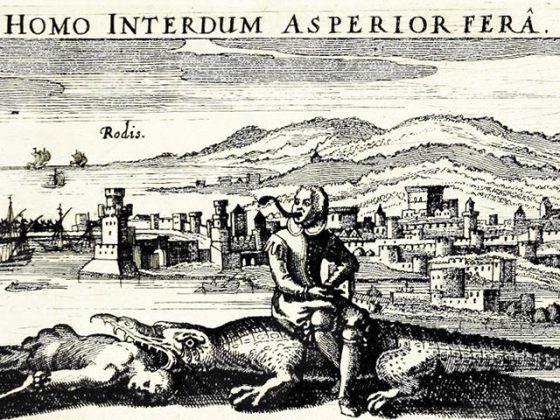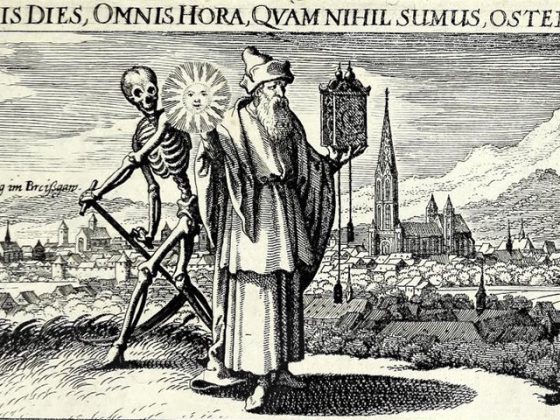


The present engraving belongs to the same book Thesaurus Philo-Politicus published from 1623 by the poet Daniel Meisner and the engraver and publisher Eberhard Kieser.
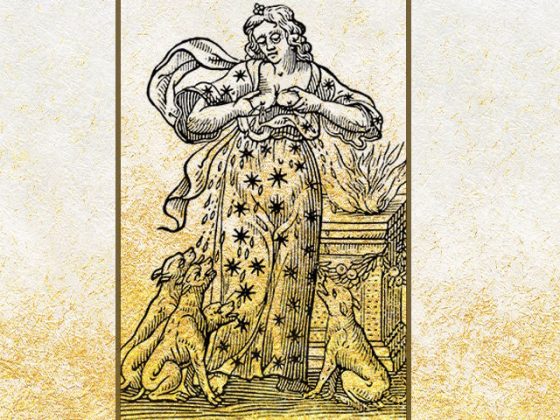
“Omnis dies, omnis hora, qvam nihil sumus, ostendit” (Every day, every hour shows us how insignificant we are)
The image is an allegorical engraving from the 17th century entitled Omnis dies, omnis hora, qvam nihil sumus, ostendit, ‘Every day, every hour shows us how insignificant we are’, which makes us see our own nothingness. The work is part of the famous Thesaurus Philo-Politicus series, published by Daniel Meisner and Eberhard Kieser in Frankfurt from 1623 onwards.
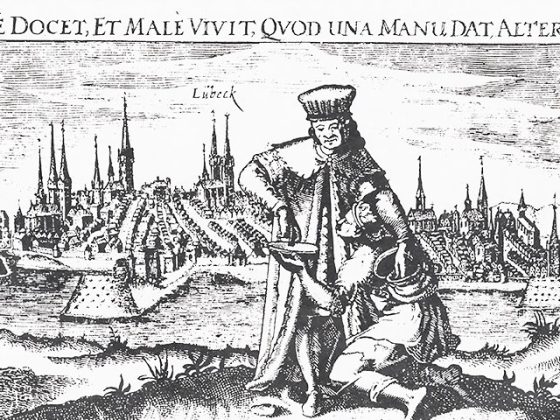
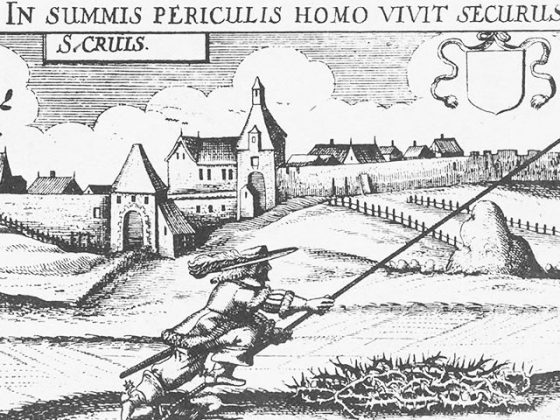
“Considera cuid, cui et qvo” (Consider what [you say] to whom [you say it] and where [you are])
This engraving is part of a vast and famous series of drawings made for the book Thesaurus Philopoliticus (1623). The series consists of more than eight hundred reproductions of urban landscapes to which the German poet Daniel Meisner and the publisher Eberhar Kieser added a message and a symbolic image.
“Emblema 5 – Avri potabilis chimice praeparatio” (Alchemically prepared potable gold)
This engraving was made by the German artist Wolfgang Kilian and was published in an alchemical and medical book written by the German physician Malachias Geiger entitled Microcosmus Hypochondriaca Tractatus (1652) ‘The Hypochondriac Microcosm on Hypochondriac Melancholy’.
“Omnia mercurio, sulphure et sale” (All things exist through Mercury, Sulphur and Salt)
I am sending you this engraving which is the forty-fifth emblem of the book Emblematum sacrorum et civilium miscellaneorum ─’Various Sacred and Civil Emblems’─, written by Jacob Bornitz.
Cognitio
I am pleased to send you this engraving entitled: Cognitio. The scene, allegorical and mythological, shows us the seat of the nine muses on Mount Helicon, presided over by the Gods Apollo ─identified by his luminous aura and his harp─ and Pallas Athena ─who appears in the upper left corner on a cloud, with a helmet and a spear.
Clarifying concepts -Part Four-
I share with you these new clarifications on eternal Gnostic concepts: What are the gunas? What are the tattvas? What is Totemism? What is the firmament as mentioned in the Bible, in Genesis? etc.
“Finitum producit infinitum” (The finite produces the infinite)
We can see a cloth on which musical notes are written, giving us to understand that the basis of creation lies in them and in the octaves that we can perceive. This is one of the mysteries that surround the THEOMEGALOGOS Himself.
“Mutua rerum metamorphosis” (Mutual metamorphosis of things)
This engraving is telling us what the true Masters of the Hermetic Art affirmed and continue to affirm: “In the water the fire sleeps”…
Mercury and Virtue
I am pleased to bring you, on this occasion, this beautiful artistic work by the Italian Renaissance painter Dosso Dossi (1489-1542). The painting is preserved in the Royal Castle of Wawel, Krakow.


![Consider what [you say] to whom [you say it] and where [you are], Daniel Meisner Consider what [you say] to whom [you say it] and where [you are], Daniel Meisner](https://vopus.org/wp-content/uploads/2026/04/considera-cuid-cui-et-qvo-daniel-meisner-default-560x420.jpg)